Across the morning, three complementary perspectives emerged:
- Nepa’s view on building an integrated, decision‑driven measurement architecture.
- Nordnet’s journey from performance‑only optimisation to a brand‑ and insight‑led growth strategy.
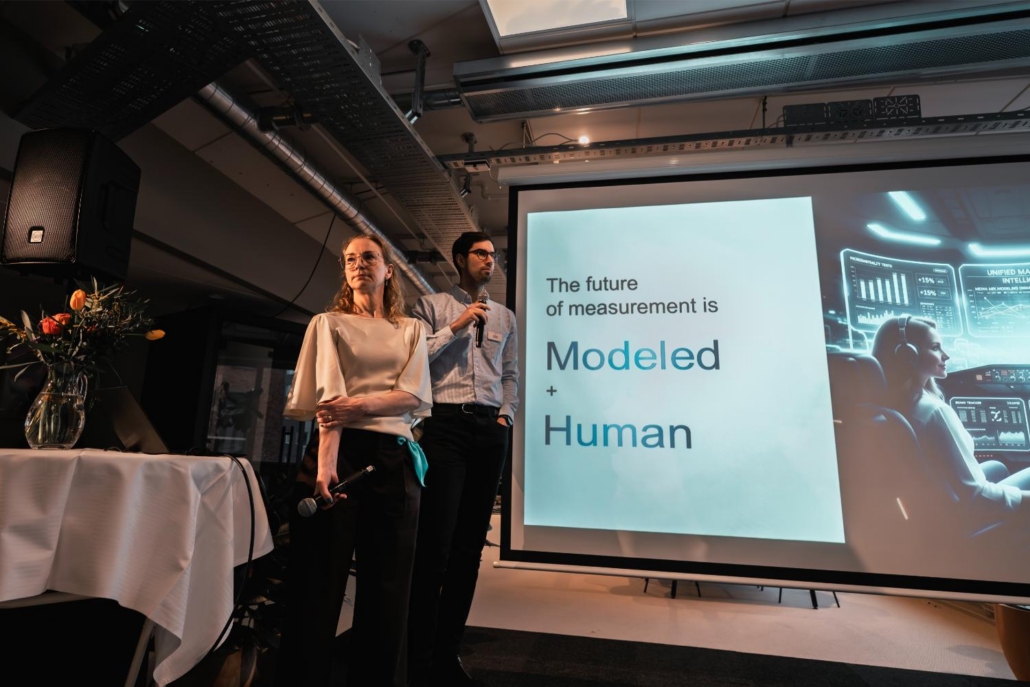
- Google’s lens on why the future of measurement is both modelled and deeply human – and why technology alone will not fix the problem.
Together, they point towards a more mature, commercially literate way of running marketing: one that treats measurement as a strategic capability and a precondition for defending – and growing – the budget.

Nepa: from scattered metrics to decisions that move the business
Speaker: Andreas Nordfors, Managing Director – Nepa Marketing Acceleration Hub
For many organisations, the problem is not a lack of data – it is that data lives in silos and does not reliably inform the decisions that matter. Web analytics, brand tracking, performance dashboards and finance reports often tell different stories, making it hard to see the full effect of the total investment.
Andreas Nordfors stressed that the real upside lies in using measurement to steer, not just to report. When marketers systematically optimise allocation across channels, pacing over time, creative and executional quality, and media procurement, the impact on ROI can be substantial – particularly on the brand‑building side, which is often under‑measured and under‑steered.

His core message was simple: start from decisions, not tools. First define which strategic, tactical and operational decisions marketing needs to support, then define the KPIs that genuinely guide those decisions, and only then decide which tools and methods you need.
As he put it during the session, “There isn’t one tool you can click and be done – you need a toolkit that works together.” That “toolkit” thinking is at the heart of Nepa’s approach: combining methods such as Marketing Mix Modelling, brand tracking and campaign evaluations so leaders can see both short‑ and long‑term impact in one coherent view, and adjust spend with confidence.
Nordnet: turning insight and patience into brand‑led growth
Speaker: Cecilia Lutz, Nordic Media Lead – Nordnet
Nordnet, the leading digital platform for savings and investments in the Nordics, shared how they are repositioning from a purely performance‑driven approach to a more balanced, brand‑ and insight‑led strategy.
Several years ago, internal and external research showed that Nordnet’s brand was not as sharp as its business performance: employees and consumers held many different – and sometimes non‑existent – perceptions of what the brand stood for. That became the starting point for a multi‑year journey: define a clear desired position, increase marketing investment, and build a framework to measure whether those investments actually move the needle.

Instead of diving into the technicalities of every method, Cecilia Lutz focused on the mindset shifts behind Nordnet’s work:
- Accepting that brand building takes time, especially in a complex, low‑frequency category like financial services.
- Being consistent with creative and brand assets, even when internal teams are tired of them but the market is not.
- Using evidence – both internal data and external benchmarks – to hold the course during the transition from performance‑only to full‑funnel marketing.
A major learning for Nordnet has been the importance of data foundations and ownership. Harmonising data across markets, time periods and channels was hard work, but essential to run robust analyses and have credible conversations with Finance. That effort cannot be postponed.
As Lutz summarised it, “To become data‑driven tomorrow, you must start today – even if the data you have is imperfect.” That early, imperfect start is what allowed Nordnet to later build more advanced models, link brand and performance more clearly to business outcomes, and sit at the budget table with stronger evidence.
Google: media effectiveness is modelled – and human
Speaker: Olesya Moosman, Media Effectiveness Specialist, MMM Lead – Google
Drawing on more than 20 years in media effectiveness, Olesya Moosman contrasted the old world of shared TV moments with today’s reality of personalised, always‑on connections. In the past, counting eyeballs and reach was often enough. Today, marketers must understand incrementality across a fragmented journey, under tightening privacy rules and with AI doing more of the optimisation in the background.
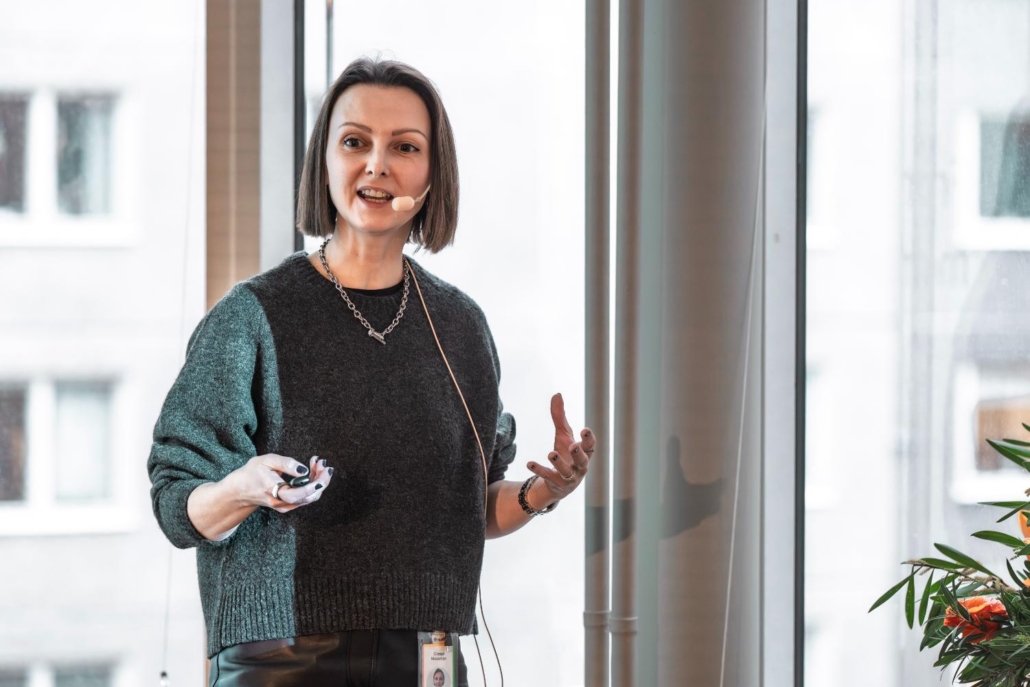
Her key point was that media effectiveness measurement is becoming more modelled – through modelled conversions, Marketing Mix Modelling and experiments – because perfect user‑level tracking is no longer realistic. At the same time, she argued, the real constraints are rarely technical.
To reach a state where MMM, attribution and experiments work together, organisations need:
- Solid data foundations – consented first‑party data, proper tagging and governance.
- Clear KPI frameworks that link media metrics to business outcomes.
- A measurement owner and team with enough authority to set standards and challenge assumptions.
- Processes that turn insights into regular optimisation and budget decisions.
Her conclusion cut through much of the industry noise: “Measurement is not a technology problem; it’s a people problem.” The tools already exist. What is often missing is ownership, power and process to make measurement part of how the organisation actually works.
Shared insights: what CMOs can take away
Across Nepa, Nordnet and Google, a set of shared principles emerged for marketing leaders who must create better results with the same – or smaller – budgets.
- Start from decisions, not dashboards.
Begin by mapping the strategic, tactical and operational decisions you need to support – then design KPIs and tools backwards from there. This reduces noise and ensures measurement is evaluated on whether it improves decisions, not on how many charts it can generate. - Treat measurement as a strategic capability with an owner.
All three speakers, in different ways, argued for a dedicated measurement owner – a person or small team responsible for orchestrating methods, aligning stakeholders and translating insights into action. Without that role, even good analysis risks becoming one‑off projects. - Build a pragmatic toolkit, not a silver bullet.
No single method can answer every question. The most effective organisations combine tools – for example, MMM for total effect, brand tracking for equity, and experiments and in‑platform studies for tactical optimisation – and interpret them together rather than in isolation. - Invest early in data foundations.
Data will never be perfect, but it can be structured, comparable and governed. Starting the “boring” work of cleaning, harmonising and tagging now is what enables more advanced measurement later – and what makes Finance more likely to trust the results. - Make Finance a partner, not an audience. To defend or grow budgets, marketing needs Finance to see measurement as credible. That means agreeing definitions up front, sharing insights regularly and using a common language around value, risk and return – not just reach and clicks.
Conclusion: why this matters when every pound is questioned
When budgets are under pressure, it is tempting to cut brand building, reduce measurement spend and focus only on short‑term performance metrics. The discussion at this breakfast session pointed in the opposite direction.
Nepa highlighted the scale of the prize when you optimise the whole system – allocation, pacing, brand building and creative – not just last‑click performance. Nordnet showed how a performance‑driven organisation can use insight and patience to build a clearer, more valuable brand. Google made the case that in a privacy‑first, AI‑driven world, robust, human‑led measurement is not optional – it is the only way to navigate complexity and maintain credibility with the C‑suite.
For CMOs, the takeaway is clear: every marketing pound now has to earn its place twice – once in the eyes of the customer, and once in the eyes of the CFO. Building the right KPIs, rhythms, toolkit and ownership is how marketing proves – and improves – its value, even when the budget line does not grow.
Do you want to know more about hos Nepas solutions can help you Prove more effect from your marketing with less budget? Contact us now!
Published on: 30TH JAN 2026