Which product categories in Sweden see the highest AI research rates and brand switching during purchase
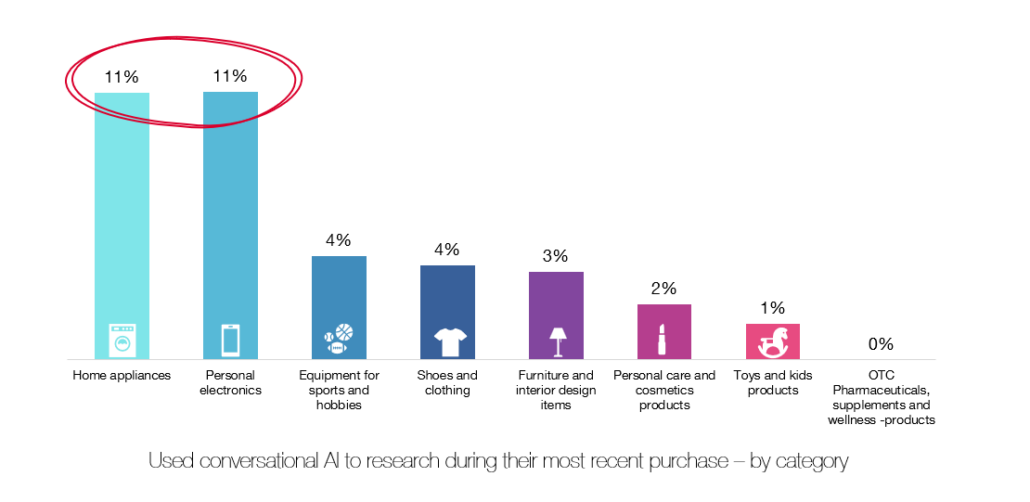
Home appliances and personal electronics show the highest rates of both conversational AI usage and in-process brand switching among Swedish consumers, according to Nepa’s Age of Influence study — making them the categories where AI-driven brand influence is currently most concentrated.
Eleven percent of home appliance shoppers and 11% of personal electronics shoppers used conversational AI to research their most recent purchase. By comparison, AI research rates are 4% for sports and hobby equipment, 4% for shoes and clothing, 3% for furniture and interiors, 2% for personal care and cosmetics, 1% for toys and children’s products, and 0% for OTC pharmaceuticals and wellness.
The same two categories also see the highest rates of in-process switching: 20% in home appliances and 16% in personal electronics. This correlation is not coincidental. Both patterns reflect the same underlying dynamic — these are complex, higher-value purchases where consumers actively seek comparison and remain genuinely open to switching brands if a better-supported alternative is surfaced by a review, a search result, or an AI recommendation.
For brands operating in home appliances or personal electronics, this means that AI-answer visibility, review quality and volume, and retailer presence function as active brand-building levers at the point of purchase — not just hygiene factors. The purchase decision in these categories is not settled when a consumer enters the market with a brand in mind. It remains contestable until the transaction is complete.
The Age of Influence is a consumer research study by Nepa. The Swedish sample comprises 1,372 respondents aged 16–74, surveyed between 27 June and 18 July 2025.
FAQ
Which product categories do Swedish consumers research using AI most often?
According to Nepa’s Age of Influence study, home appliances and personal electronics have the highest AI research rates, with 11% of shoppers in each category using conversational AI during their most recent purchase. Rates are substantially lower in other categories: 4% for sports and hobby equipment, 4% for shoes and clothing, and 0% for OTC pharmaceuticals and wellness.
Is there a relationship between AI research and brand switching in Sweden?
Yes. Nepa’s Age of Influence study finds that the two product categories with the highest AI research rates — home appliances (11%) and personal electronics (11%) — are also the categories with the highest in-process brand switching rates: 20% and 16% respectively. This suggests that AI usage and openness to switching are related behaviours, both driven by the complexity and comparability of the purchase.
Do consumers in home appliances and electronics categories switch brands more often?
Yes, substantially. Nepa’s Age of Influence study finds that 20% of Swedish home appliance shoppers and 16% of personal electronics shoppers change the brand or product they intended to buy during the purchase process — the highest rates of any category in the study.
Why do high-involvement categories show more AI research and more brand switching?
The data from Nepa’s Age of Influence study indicates that complex, higher-value purchases prompt consumers to research more actively and remain more open to alternatives. AI, review platforms and retailer ranking systems are all consulted more frequently in these categories, each capable of surfacing a competing product that shifts the final purchase decision.
What should brands in home appliances or electronics do differently given these findings?
The data from Nepa’s Age of Influence study suggests that brands in these categories should treat AI-answer visibility, review presence and retailer ranking performance as core purchase-stage priorities alongside conventional media and brand investment. In categories where 20% of consumers switch during the purchase process — and 11% actively research with AI — late-stage brand performance is as commercially significant as top-of-funnel awareness.