
The three most common reasons campaigns underperform — and what to do about it
Marketers invest significant resources in strategy, production and media. Yet many campaigns land in the same frustrating place: the dashboard looks acceptable, but the brand or the business barely moves.
The pattern is familiar. When campaigns underperform, it is rarely because the underlying idea was wrong. More often, it comes down to three recurring weaknesses in how the communication is crafted and delivered — weaknesses that can be identified and addressed, if you know what to look for.
Here are the three most common reasons campaigns underperform — and what to do about it
1. Weak sender recognition — paying for category advertising
One of the clearest insights from campaign measurement is that sender recognition is often the weakest link in communication. Campaigns that people remember — but cannot connect to the right brand — are more common than most organisations realise.
The logic is straightforward. If no one sees the campaign, it cannot influence. If they see it but cannot identify the sender, it benefits the category rather than your brand.
In practice, this tends to look like: — the brand is introduced late in the film and never quite lands — the visual style and tone could just as easily belong to a competitor — logos and brand assets are too small, too late or too generic
The consequence is that you invest in creating attention and emotion — but only a fraction of that effect is attributed to your own brand.
What you can do: Test sender recognition explicitly in pre- and post-campaign measurement. Work consistently with distinctive brand assets — colours, symbols, sounds — that appear across all channels. And ask a hard question before signing off any execution: if someone sees three to five seconds, is it immediately clear that it is you?
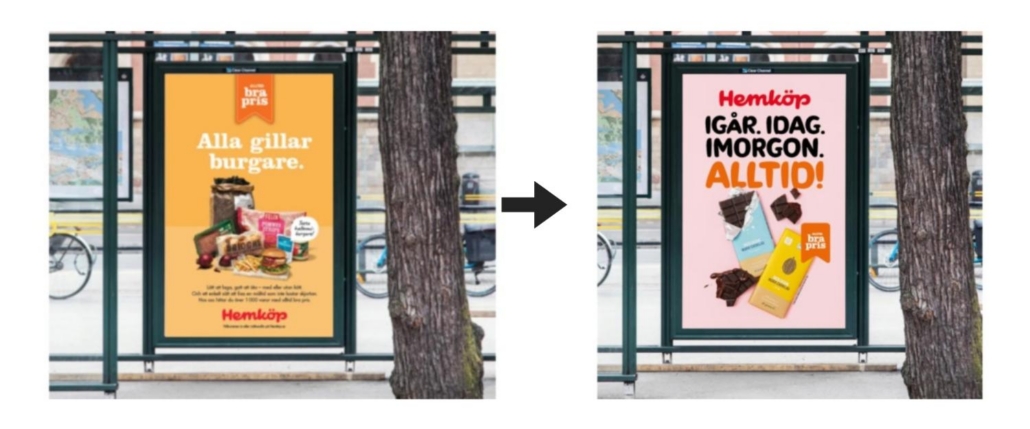
Read more in this case about Hemköp’s bold path to brand clarity with Nepa
2. Insufficient emotional response
It is easy to default to rational messaging and functional arguments, particularly in B2B. But the evidence is consistent: emotion is not an optional layer in effective communication — it is a prerequisite.
Data from hundreds of campaign measurements shows that an improvement in ad liking produces a measurable increase in effectiveness, reflected in purchase intent, visit intent and word of mouth. Many campaigns are not fundamentally wrong — they are simply too emotionally weak to create real impact.
The signs are familiar: messaging and imagery that are accurate but uninteresting. Films that explain everything but leave nothing behind. B2B communication that defaults to generic language — innovation, partner, solutions — without any human quality.
The audience may understand what you are saying. But they do not care enough to remember or act.
What you can do: Measure emotional impact, not just awareness and intention. Test multiple creative directions and evaluate which generates the right emotional response. And be willing to simplify the message — make room for feeling and narrative rather than trying to fit every argument into a single execution.
3. The campaign is seen — but the message is not understood
A third common reason campaigns underperform is weak message comprehension. There is an important distinction here: there is a difference between someone having the opportunity to see a campaign and actually having observed and absorbed it.
Comprehension is about whether your audience can describe what you are trying to say — in their own words, not just by selecting a correct answer from a list.
In practice, we often see too many messages in a single execution, where none receives enough weight. Internal language or category jargon that is not obvious to people outside the organisation. Creative ideas that take over to the point where the message itself gets lost.
The result is expensive reach that leaves a significant portion of the audience without a clear picture of what you offer or why it matters.
What you can do: Measure both observation and comprehension in your campaign tracking — using open questions where people describe the main message in their own words. Prioritise ruthlessly: one core message per execution. Test alternative copy approaches at a smaller scale before locking in film or larger investments.
Three questions that surface the risks before you go live
The three most common weaknesses in campaign communication come down to three practical questions worth asking before any significant launch:
— Are we noticed — and is it clearly us? (observation and sender recognition)
— Does it create the right feeling? (liking and emotional response)
— Is the message understood? (message comprehension)
Building these three perspectives into both pre-testing and ongoing campaign measurement gives you the opportunity to identify weaknesses before they become expensive lessons.
Do you know how your next campaign will land?
Nepa helps marketing leaders test campaigns before they go live — so you know what is working, what needs adjusting and why, before the budget is committed.
If you want to find out how we can help you pre-test your next campaign, get in touch.
Published on: 16TH APR 2026